


Word Search Game: Offline
4.6123.00 Reviews
App Specs
- Version
- 2.6
- Updated On
- License
- $1.99
- Downloads
- 10,000+
- Developer
- otto games
- Categories
- Word
- Platform
- Android
Screenshots
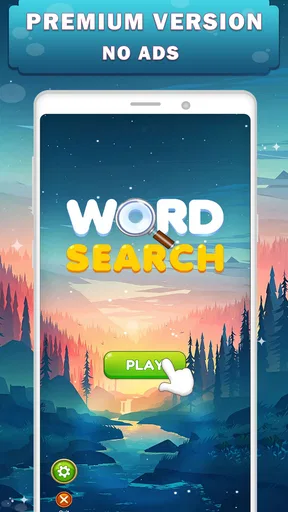
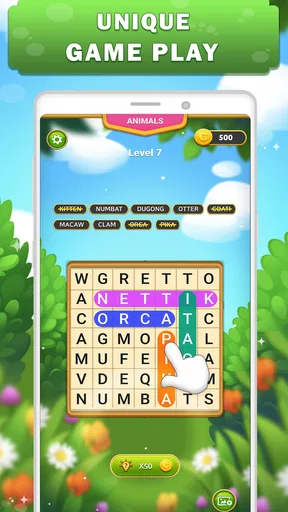
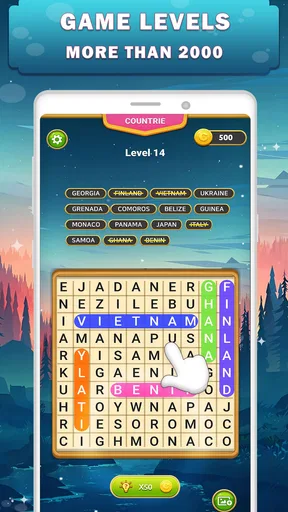
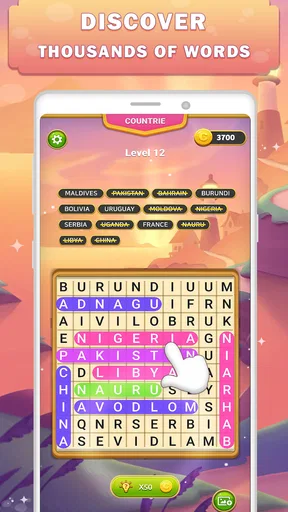
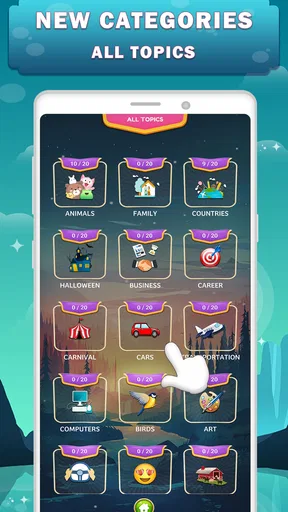
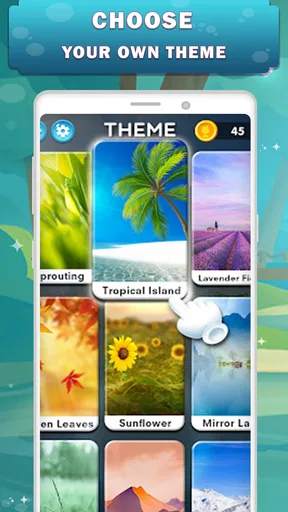
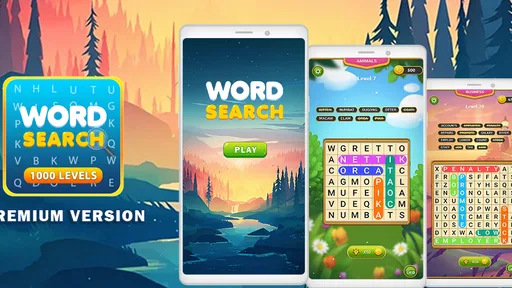
 Analysis by AppCompare
Word Search Game: Offline is the kind of small word puzzle I can open without preparing for a long session. Its main appeal is straightforward: it gives me a familiar word-search activity that works as a casual way to fill a few quiet minutes. I found the experience easiest to appreciate when I treated it as a focused break rather than as a deep strategy game. The interface and premise are simple, which is exactly why it can fit into a commute, a waiting room, or a short pause between tasks.
The capability that defines the game is its offline word-search format. That matters more than it may sound. A puzzle that does not depend on an active connection is useful when I want something dependable instead of another app that asks me to sign in, load a feed, or wait for online content. I can keep the game in mind for travel, weak-signal areas, or moments when I want entertainment without the distractions that usually surround connected mobile games.
Why the offline focus changes the experience
Many word games compete for attention through daily challenges, social features, leaderboards, or constantly changing content. Word Search Game: Offline takes a quieter route. Its identity is based on the act of finding words on a grid, so the value comes from concentration and repetition rather than from a large surrounding system. In my experience, that makes it easier to start and stop without feeling that I have interrupted a larger event.
That simplicity is also the most important trade-off. If I am looking for a word game with a story, a competitive ladder, elaborate progression, or a large collection of different puzzle types, this is unlikely to satisfy me for long. It is better understood as a dedicated word-search game than as an all-purpose puzzle platform. The offline approach removes one source of friction, but it also keeps the experience deliberately narrow.
The game is published by otto games and sits in the word category. It has an average rating of 4.6 from around 675 ratings, with roughly 123 written reviews, and its audience is reflected in its 10K-plus installs. Those figures suggest that it has found a modest but interested group of players, rather than presenting itself as a huge mainstream game. I see that as a useful signal for people who prefer a focused title over a crowded, feature-heavy alternative.
The price is $1.99, while optional in-app items range from $0.99 to $3.99 each. That makes it important to consider how you prefer to pay for casual games. Some players will like having a low entry price; others may prefer a free download before deciding whether a puzzle app deserves space on their phone. I would make that choice based on how often I expect to play word searches, not simply on the small purchase amount.
What playing it feels like
The basic routine is easy to understand. I look across the letter grid, search for the target word, and mark it when I find the correct sequence. Words may require scanning horizontally, vertically, or diagonally, so the challenge is not just recognizing vocabulary. It is also about controlling my eyes and checking directions carefully instead of jumping at the first promising group of letters.
Worth Reading Before You Choose

EA SPORTS FC Mobile 26 Is a Bigger Football Game, but It Takes Time

Flipboard Shows What News Apps Must Do Beyond the Feed

Switching to Android Auto Means Rethinking Your Driving Routine

Google Calendar Makes a Crowded Week Easier to Manage

Ludo King Makes the Most of the Minutes Between Plans

Baby Panda World Brings Quick Play to Modern Phones, but Its Game Library Feels Busy
That creates a pleasant rhythm. At the beginning of a puzzle, I usually scan for distinctive letter combinations or unusually long words. Once a few answers are found, the remaining grid becomes less intimidating because there are fewer possibilities to inspect. This is where the game works well as a short mental reset: it gives me one clear task, with no need to remember a complicated rule set.
A useful habit is to avoid searching randomly from the first letter of every target. I get better results by starting with rare letters, unusual endings, or words that are longer than the rest. When the grid feels crowded, I scan in one direction at a time and move systematically rather than bouncing around the screen. That approach is a small but meaningful improvement over simply dragging my finger wherever a word seems likely to be.
I also recommend pausing when the grid starts to blur together. Word-search puzzles can become harder because of visual fatigue rather than because the vocabulary is genuinely difficult. A brief break often helps me notice a word that was visible all along. This makes the offline format particularly convenient: I can close the game and return later without turning a short puzzle into a forced endurance session.
A realistic everyday use case
My favorite use for this type of game is a ten-minute gap that is too short for a film or a substantial game but long enough to become boring. Imagine waiting for an appointment in a place with unreliable reception. Instead of repeatedly checking the same apps, I can open the puzzle, work through a word search, and put the phone away when my name is called. The game does not need to become the center of the day to be useful.
It can also suit a quiet evening routine. I might play while having tea, after finishing work, or before putting the phone down for the night. Because the activity is based on visual attention rather than rapid action, it feels calmer than many arcade games. I would still avoid treating any screen-based puzzle as a guaranteed sleep aid, but the slower pace is a better fit for winding down than games built around constant alerts or competition.
For travel, the offline capability is the clearest practical advantage. On a flight, in a basement, or in an area with poor reception, an app that depends on a connection can become useless at exactly the moment I want it. This game is more dependable in that situation. The important distinction is that “offline” improves access, not necessarily variety. It means I can play when disconnected; it does not automatically mean the game will offer the depth of a large online puzzle service.
Where it fits among word-game alternatives
Compared with a daily word game, this title is less dependent on a particular schedule. A daily format can be satisfying because everyone receives the same challenge and the result becomes part of a routine. Word Search Game: Offline is more flexible: I can play when I have time, without waiting for a new daily puzzle. The downside is that it may not create the same sense of occasion or shared conversation.
Compared with crossword or clue-based games, it asks for a different kind of thinking. I do not need to solve a definition or construct an answer from several hints. The words are found through visual scanning, pattern recognition, and direction checking. That makes it a good choice for someone who enjoys vocabulary but does not want a puzzle that demands extensive general knowledge. A player who wants richer clues and more varied reasoning should probably choose a crossword-focused alternative instead.
Compared with word-building games, the pressure is also lower. I am not constantly deciding how to arrange letters for points or competing against a timer. That can make this game friendlier for relaxed play, but it may feel too passive for people who enjoy tactical choices. The right comparison depends on whether you want to discover hidden words or create them from available tiles.
One non-obvious benefit of the focused design is that it is easier to use without sound. I can play discreetly in a waiting area or shared room because the core activity is visual. That is not a dramatic feature, but it changes where the game is practical. A fast action game may be inappropriate in a quiet setting; a word-search grid usually asks much less of the environment around me.
The trade-offs I noticed
The first limitation is repetition. Word searches are enjoyable partly because their rules are stable, but that same stability can make the experience feel familiar quickly. If I play for a long stretch, the central action does not transform into a new type of challenge. I would recommend short sessions unless I already know that this particular puzzle format holds my attention for hours.
The second trade-off concerns the purchase model. The game costs $1.99, and optional items are available from $0.99 to $3.99 per item. That is not automatically a problem, but I would want to understand my own tolerance for additional spending before buying. Someone who wants a simple, predictable purchase may prefer to avoid optional items entirely; someone who enjoys extending a casual game may see them differently. The key point is to treat the base purchase and optional spending as separate decisions.
The third limitation is that the game’s simplicity may not meet every accessibility need. Word searches rely heavily on distinguishing letters and tracking a line across a grid. Players who struggle with small text, visual crowding, or prolonged screen scanning should try a short session first and adjust their expectations. I would not choose this as my primary puzzle game if visual clarity were a serious concern and another title offered more control over presentation.
There is also a difference between being easy to learn and being easy to master. The rules are approachable, but finding the final few words can still become frustrating when the grid is dense. My practical solution is to change the search method: scan each row, column, and diagonal in order, then reverse the direction rather than repeatedly looking at the whole board. It turns a vague hunt into a checklist and reduces the feeling that I have missed something obvious.
Who will get the most from it
I think the strongest audience is anyone who wants a compact, low-pressure word puzzle that remains useful away from a reliable connection. It can work for casual players, people who enjoy vocabulary-based activities, and anyone who likes games that can be stopped without losing the entire point of the session. The Everyone content rating also makes its presentation broadly suitable for general audiences, including families looking for a simple puzzle rather than an intense competitive game.
It may also suit older phones. The current version is 2.6 and requires Android 7.0 or later, so it is not restricted to only the newest devices. That does not guarantee identical performance on every phone, but the stated system requirement makes the game relevant to people who keep an older Android device as a spare or travel phone.
I would skip it if my priority were constant novelty, multiplayer competition, elaborate rewards, or a broad collection of unrelated puzzles. I would also choose a different app if I wanted a free trial before paying, since this game uses a $1.99 purchase rather than relying only on an unpaid starting point. For a player who already knows that word searches are a favorite format, however, the focused design is more of a strength than a weakness.
Parents and casual gift-givers should think about the play context rather than assume that a general age rating answers every question. The Everyone rating indicates broad content suitability, but the more relevant issue here is whether the player enjoys visual word hunting. A child who prefers fast movement may lose interest, while a patient reader or puzzle fan may appreciate the quiet concentration. The game is best matched by temperament, not just age.
My practical recommendation
I would approach Word Search Game: Offline as a dependable pocket puzzle, not as a complete replacement for every kind of word game. Its strongest verified capability is the offline format, and that capability has a real effect: it makes a simple activity available in places where connected alternatives may be inconvenient. I value that most when I want a calm, self-contained break and do not want to manage accounts, social pressure, or a complicated progression system.
Before buying, I would ask myself three questions. Do I genuinely enjoy scanning letter grids? Will I use the game during disconnected or short-break moments? Am I comfortable with the $1.99 price and the presence of optional items priced from $0.99 to $3.99? If the answers are yes, the purchase makes sense. If I mainly want daily competition, clues, word construction, or constant variation, another category of word game will probably serve me better.
Overall, I see Word Search Game: Offline as a focused choice with a clear purpose. It does not need a large feature list to be useful, but it also should not be judged as though it offers one. For me, its best quality is the combination of familiar word searching and convenient access when I am offline. Its real strength is reliable, low-pressure play in small everyday gaps, while its main weakness is that the same narrow focus may eventually feel repetitive to players seeking deeper variety.
otto games has created something suited to people who know exactly what they want from a casual word puzzle. The game was released on May 15, 2022, and its continuing version 2.6 gives it a straightforward place on compatible Android devices. I would recommend it to a friend who enjoys word searches and wants an uncomplicated offline option, while being honest that crossword fans, competitive players, and variety seekers should look elsewhere.
Pros
- Works without an internet connection
- making it useful while traveling.
- Simple controls are easy to understand for players of all ages.
- Large word grids provide a relaxing way to pass time.
- Multiple difficulty levels offer a suitable challenge for beginners and experts.
- Quick rounds make it convenient for short gaming sessions.
Cons
- Some puzzles may feel repetitive after extended play.
- Hints or extra features may be limited in the free version.
- Small text can be difficult to read on compact phone screens.
- The game may offer little variety beyond traditional word searches.
- Ads can interrupt gameplay
- depending on the version and device.
FAQs for Word Search Game: Offline
What is Word Search Game: Offline?
Word Search Game: Offline is a puzzle app focused on finding hidden words inside letter grids. After installing it, you can play without a continuous internet connection, making it suitable for travel, commuting, or areas with limited connectivity. The game generally offers multiple puzzles and difficulty levels, so both casual players and people looking for a more challenging word exercise can find suitable content.
Can I play Word Search Game: Offline without an internet connection?
Yes, offline play is one of the main reasons to choose this type of word-search app. Once the application and its available puzzle content are installed on your device, you can usually start games without mobile data or Wi-Fi. However, an internet connection may still be required for downloading updates, displaying certain advertisements, restoring purchases, or accessing any optional online features included by the developer.
Is Word Search Game: Offline suitable for beginners and children?
The simple tap-and-drag gameplay makes Word Search Game: Offline easy for beginners to understand. Players only need to locate words in the grid and mark them, while the range of puzzle sizes or difficulty settings can provide a gradual learning curve. Parents should still check the app’s age rating, advertising behavior, language options, and privacy information before allowing younger children to use it.
Does Word Search Game: Offline include advertisements or in-app purchases?
Many free word-search games are supported by advertising, and Word Search Game: Offline may show ads between puzzles or in other parts of the interface, depending on the version and platform. Some releases can also offer optional purchases, such as removing advertisements or unlocking additional content. Before downloading, review the store listing for current pricing, purchase details, and whether the app provides an ad-free option.
What are the main benefits and limitations of Word Search Game: Offline?
The biggest benefits are its straightforward controls, relaxing puzzle format, and the ability to play without relying on an active connection. It can be a convenient way to pass time while also practicing visual attention and vocabulary recognition. Possible limitations include repetitive gameplay for experienced players, advertisements in free versions, limited customization, or a finite amount of content unless extra puzzles or features are unlocked.


